







Everybody wants the before and after. Nobody wants the Tuesday in between.
That’s the whole problem with how we talk about change. It gets told as a moment. The day he got out, the day she quit, the day it finally clicked. Two pictures and a caption. And that story is a lie by omission, because the moment ain’t where the change happened. The moment is just where somebody was watching.
Real transformation happens in a stretch of time nobody photographs and nobody claps for. It’s boring, it’s repetitive, and it mostly looks like nothing.

You don’t change your feelings. You change your defaults.
Here’s the mistake I made for years, and I see it in everybody I talk to.
I thought transformation meant I’d stop feeling a certain way. Stop being impatient. Stop wanting the shortcut. Stop feeling that thing in my chest when money’s tight. Like there’d be a version of me on the other side who just don’t have those reactions no more.
That ain’t what happens. The feeling shows up exactly the same. What changes is what you do in the four seconds after it.
That’s it. That’s the whole mechanism. You don’t get a new nature. You get a new default. And a default is just a decision you made so many times it stopped requiring a decision.
You don't get a new nature. You get a new default. And a default is a decision you made so many times it stopped being one.
Which means transformation ain’t emotional work. It’s mechanical. And that’s good news, because mechanical things can be built on purpose.
The three signs you actually changed
People confuse feeling different with being different. Feeling different is Sunday night energy. Being different shows up somewhere you can check.
One: the thing that used to take a decision don’t take one no more. You’re not resisting it. You’re not white-knuckling it. It just ain’t a live question anymore. If you’re still deciding every single time, you didn’t change. You’re managing.
Two: your reaction time to the same situation got shorter. Not that the situation stopped happening. That you recognize it faster, and the recovery that used to take a week takes an afternoon.
Three: somebody who knew you before notices without you telling them. This one’s the hardest and the most honest. If you have to announce the transformation, it might still be a plan.
Why people revert, and it ain’t willpower
Here’s what actually happens when somebody goes back.
They changed the behavior and never changed the identity underneath it. So the behavior is running against the grain of who they still believe they are, and behavior loses that fight every time, eventually, when they’re tired.
A man who thinks of himself as somebody who’s bad with money can budget for six months. He’s still gonna revert, because every day he’s doing something that contradicts what he believes about himself, and that’s exhausting in a way that don’t show up on a spreadsheet.
You can’t hold a new behavior on top of an old identity forever. One of them gives.
You can't hold a new behavior on top of an old identity forever. One of them gives.
So the real work ain’t more discipline. It’s updating what you believe you are. And that only updates through evidence. Which is why it takes so long, and why it can’t be rushed, and why the unglamorous stretch in the middle ain’t optional. You’re gathering proof.
The part nobody warns you about: it costs you people
I’ma be straight, because the motivational version of this leaves it out.
When you actually change, some relationships don’t survive it. Not because anybody did anything wrong. Because a lot of connection is built on being the same kind of person about the same kind of things. When you stop being that, the ground you were standing on together ain’t there no more.
Some folks will be happy for you and stay. Some will be happy for you and drift. And some will take it personal, because your change reads as a comment on them even when you never said a word.
That’s real, it hurts, and it’s not a sign you did it wrong. Growth has a bill and the bill sometimes comes in people.
What I’d tell you is: don’t speed it up by announcing it, and don’t slow it down to keep somebody comfortable. Just keep moving and let people choose their own distance.
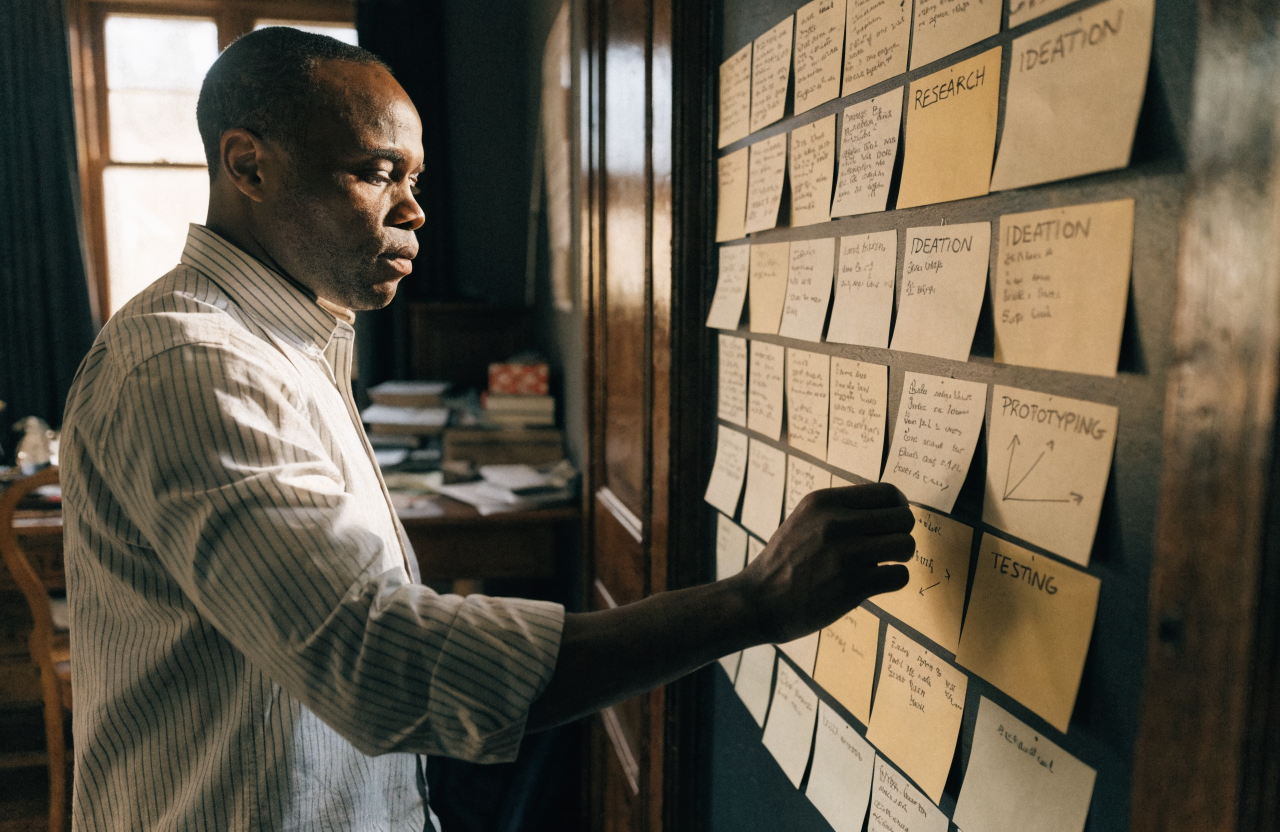
After the audit comes the rebuild
I wrote about the honest look backward in the audit that stops you repeating yourself, and this is the part that comes right after it.
Because the audit is only half. Plenty of people can tell you exactly what their pattern is, in detail, with dates. They’ve reviewed it a hundred times. And they’re still in it.
Seeing it clearly is not the same as changing one mechanism. Reflection that don’t end in a changed mechanism is just a nicer story about the same wall.
So the handoff is: the audit names the thing, and the rebuild changes exactly one input. One. Not your whole life. One mechanism, run long enough to read the result.
That’s slow on purpose. Change five things at once and something improves, but you’ll never know which one did it, so you can’t repeat it. You didn’t build anything. You got lucky and called it a system.
Improvement and transformation ain’t the same thing
People use these words like they’re interchangeable and it costs them years.
Improvement is doing the same thing better. Transformation is becoming somebody who does a different thing.
A man working sixty hours who learns to work those sixty hours more efficiently has improved. He’s still gonna be tired, he’s still trading hours for money, and he’s still one bad month from where he started. He got better at the thing. He didn’t leave the thing.
That’s why so many people grind for years and end up in the same shape, just more skilled at it. They kept optimizing a position instead of changing it.
And I ain’t knocking improvement. You need it, and most transformation is built on top of skills you improved first. But know which one you’re doing. Because if the thing you’re in don’t work, being better at it just gets you deeper in faster.
The test is simple: if this works exactly the way you’re planning, do you end up somewhere different, or the same place with better numbers? Both are valid answers. Just don’t confuse them, and don’t spend a decade improving your way toward something improvement can’t reach.

What to do the day you slip
You’re going to slip. Everybody does, and the plans that don’t account for it are the ones that break.
Here’s what most people do: they slip once, decide the whole thing was fake, and quit. One bad day gets read as evidence about their character instead of what it actually is: a bad day.
The slip ain’t the problem. The story you tell about the slip is the problem.
So handle it like a reading, not a verdict. Three questions, same day if you can:
What was different about the conditions? Almost every slip has a setup: tired, rushed, somewhere you don’t normally be, around somebody you don’t normally be around. Name the condition, not the failure.
Did the mechanism fail, or did I skip it? Two completely different fixes. If it failed, it was too complicated. If you skipped it, it wasn’t anchored to anything in your day.
How fast did I get back? This is the only number that matters long term. Not whether you slipped. How long you stayed down. A person who slips weekly and recovers same-day is transforming. A person who slips monthly and disappears for three weeks ain’t.
Recovery speed is the real metric, and almost nobody tracks it because it don’t feel like progress. It is. Consistency ain’t never slipping. Consistency is a short distance between the slip and the return.
Consistency ain't never slipping. Consistency is a short distance between the slip and the return.
Keep whatever you’re using to track it somewhere you’ll actually see it. Scattered systems are the ones that quietly stop working. Same reason I put everything in one place in the vault where the resources actually live.
Pressure reveals. It don’t create.
The other side of this is what happens when the load comes on, and I went deep on that in what pressure actually reveals about how you built.
Short version: pressure ain’t the thing that changes you. Pressure is the test that shows you what you already built while nobody was watching.
Which is why the quiet stretch matters so much. The unwatched work is the thing that gets tested. The tested moment is just the receipt.
Everybody wants to be strong in the moment. Almost nobody wants to do the boring thing on the Tuesday that makes the moment survivable.
What it looks like when nobody’s around
That’s me talking about how I show up with my kids, and the no-excuses part of it. I put it here on purpose, because parenting is the clearest example of unwatched transformation there is.
Ain’t no audience for how you talk to your kid at seven in the morning when you’re tired. There’s no metric. Nobody’s grading it. And it’s probably the single most consequential thing you’ll do all day.
That’s the shape of all real change. High consequence, zero witnesses, no immediate feedback.
Where I actually learned this
There was a stretch where things got away from me. Bills got missed, tools I depended on shut off, and the whole thing had a domino quality to it. One thing slips and takes three others with it.
What I want to tell you about ain’t the crisis. It’s what came after, because that’s the part that actually taught me something.
My instinct was to fix everything at once. Big overhaul, new systems, change it all this week. And I did try that, and it fell apart inside of a month, because I’d built something too complicated for a tired version of me to maintain. And the tired version is the one who has to run it.
So I started over smaller. One thing written down. Then one more. Nobody saw any of it. There was no day where it turned around; there was just a point months later where I noticed the same category of problem hadn’t happened in a while.
That’s what it actually feels like. Not a breakthrough. An absence. You don’t notice you evolved. You notice something stopped happening.
And I’ll say this plain: I ain’t finished. I’m writing this from inside the work, not from the other side of it. Anybody telling you they arrived is selling something.
Start with the one mechanism
Here’s the whole assignment, and it’s smaller than you want it to be.
Name one thing you’ve done more than twice that you wish you hadn’t. Not a character flaw. A specific repeated action.
Then find the input right before it. The moment, the trigger, the condition. Change that one input and nothing else. Run it thirty days without adding anything.
You’ll want to stack more on. Don’t. The stacking is how people build something they can’t maintain and then decide they’re the problem.
If you want a read on how you’re naturally built before you start swinging at it, your sun, moon and rising is the three-sentence answer. Not a forecast, just language for the way you already operate so you stop fighting your own material.
Dig for the mechanism, not the feeling. Build one change you can actually hold. Grow into somebody who don’t need to announce it.
Nobody’s watching. That’s the point. That’s always been the point.
2 Responses