





Three weeks from now somebody in your family is going to be standing in an aisle holding a $50 card to a chain store they don’t even like. Not because they cheap. Because they ran out of ideas and ran out of time, and that rack was sitting right there by the register.
They gone buy it. Full price. No negotiating, no reviews read, no questions asked. Then they gone put it in an envelope and apologize for it while somebody opens it. That was a sale, and it went to a company that ain’t never once asked that person how their week went.
You got a skill that same person respects. They would rather hand over your work than that card, and they would pay more for it. They just got no way to give it to nobody. No card. No price. Not a sentence written down nowhere that say what it includes.
So here’s what you walking away with today. The gift season don’t run on inventory. It runs on redeemable promises. You can build one this week with a phone, a price, and five lines of terms. And the part nobody mention, the part that decide whether this helps you or hurts you, is how you write them terms so November money don’t turn into resentment by February.
The season ain’t short on money. It’s short on ideas.
The season ain’t short on money. It’s short on ideas.
What People Actually Run Out Of
Ask somebody in the middle of December what the hard part is. They ain’t gone say the money, even when money is tight. They gone say they don’t know what to get. A list of names and no ideas, and the deadline is public. Everybody gone be sitting right there watching the paper come off.
That’s the whole thing right there. A gift card is what people buy when they out of ideas, not when they out of money. A white flag with a dollar amount printed on it.
Which mean the demand in front of you this month ain’t demand for a haircut, or a tray of food, or a detail job. It’s demand for relief from indecision. That’s an easier thing to sell, and it pay the same.
A Redeemable Promise Is A Product
You been waiting on inventory. You think you need a supplier, a box, a label, a minimum order, a photo shoot. You need two things. Something somebody can redeem, and some proof they bought it.
That’s it. That’s the whole mechanism.
Barber: two cuts, good through March. Braider: one install. Somebody who cook: a pan of whatever you famous for, on a date they pick. Detailer: one interior, the real one, not a vacuum and a wipe down. Driver: four airport runs. Tutor: six sessions. Mechanic: three oil changes. Somebody who do massage: ninety minutes, because sixty always feel short. Somebody in the trades: a furnace tune up before the cold really sit down on us.
Look at that list again and notice what ain’t on it. Not one of them required you to go buy nothing first. Every single one is work you already know how to do, packaged so a third party can purchase it for somebody else.
If you been meaning to get listed and priced before the window opens, this is the cheapest version of that there is. You ain’t got to build a catalog. You got to build one line item.
The Buyer Ain’t The Customer
Here’s the part that trip people up, and it’s the difference between a gift offer that moves and one that just sit there.
Normally you sell to the person who gone use the thing. A gift is three parties. The person paying, the person redeeming, and you. The one holding the card ain’t never gone sit in your chair.
So everything about how you describe it has to change. The person buying don’t care about your technique. They care about one moment you won’t even be in the room for: the face of the person opening it. That’s what they purchasing. Your whole job is making them certain that moment go well.
You ain’t selling a haircut. You selling somebody a way out of the store.
You ain’t selling a haircut. You selling somebody a way out of the store.
Practically, that mean it has to look like something. A card they can put in a hand. A PDF that don’t look like a text you sent at midnight. A name on it. A number on it. What it includes, spelled out, so the person opening it ain’t got to guess and the person giving it ain’t got to explain.
What You Collected Ain’t Revenue Yet
Now the part that matter more than everything else I said.
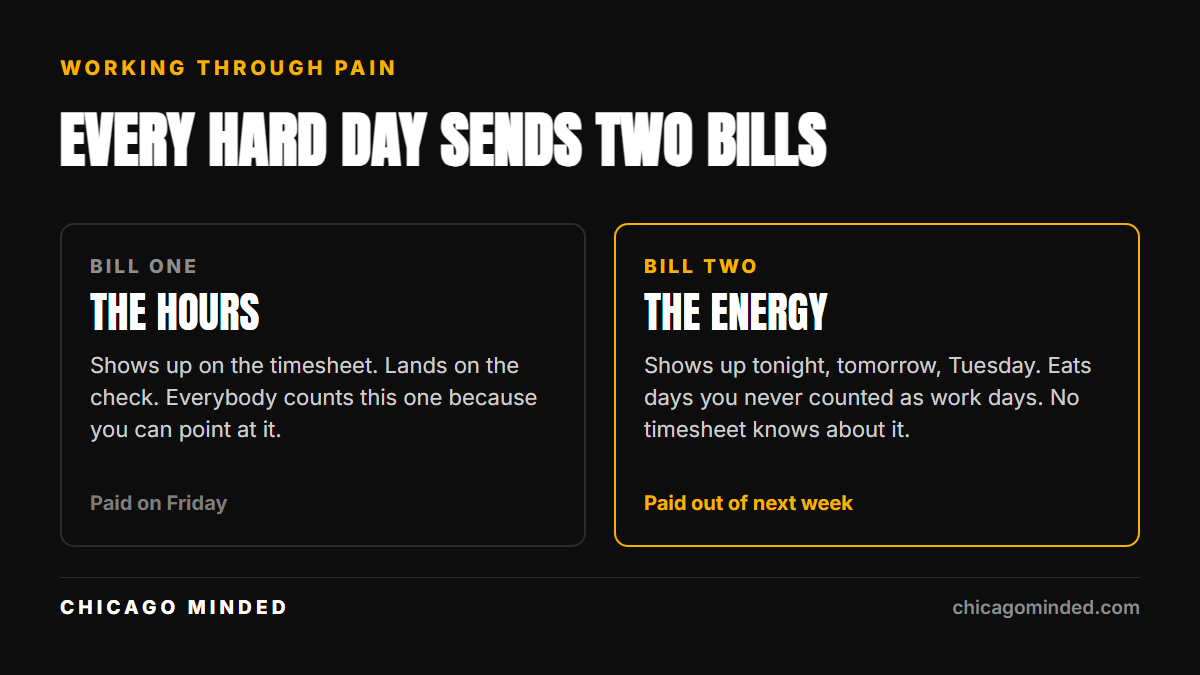
Somebody hand you $120 in November for work you gone deliver in February. That money is in your account. It is not yours. An accountant would call it a liability, and they would be right, and that word sound harsh right up until you been on the wrong end of it.
So call it what it is. An obligation with a date on it.
Money you collected early ain’t profit. It’s a promise you still got to go keep.
Money you collected early ain’t profit. It’s a promise you still got to go keep.
Here’s how it goes wrong, and it go wrong the same way every time. November money feel like found money. You spend it on November problems. Then February come and somebody walk in with that card, and now you doing the work for free, out of your own hours, in a week that was already full. And you gone catch yourself irritated at a person who did nothing to you but pay you in advance.
That ain’t their fault. That’s a pricing problem wearing a customer’s face.
A Signed Job Never Did Feel Like Money To Me
I came up in commercial HVAC. I hold a journeyman license in more than one state, and I still work a full time job, seven to three, while all of this get built in the hours around it.
In commercial work you learn something early. A signed job ain’t money. It’s a date. Somebody put your name on a schedule for a Tuesday six weeks out, and that Tuesday is coming whether you ready or not. Whether you tired. Whether the part came in. Whether that same week already got four other Tuesdays stacked in it. The paper feel like a win the day you sign it. It cash out as an obligation.
So when I see somebody excited about collecting money up front, I recognize that feeling and I don’t fully trust it. The excitement is real. It’s just early.
The other half of this I learned in my own house. My wife Chiquita is a co founder here, and she pays every business bill we got. Which mean she is the only one who can tell you what’s actually owed around here versus what just landed. I’m the one who want to say yes to people. She the one holding the ledger that say what yes cost. Twenty one years in, I know which one of us to check with before I promise anybody anything.
Take money for February and you have already spent February. Make sure February can afford it.
Write The Terms While You Grateful
You gone be grateful when the first one sell. Write the rules right then, in that mood. The version you write in February gone be written by a tired man, and he gone write it against the customer.
Write the terms while you grateful. Not in January when you resentful.
Write the terms while you grateful. Not in January when you resentful.
Five things to put in writing before you sell a single one:
- What it includes, and what it don’t. “One interior detail, up to a midsize SUV” beats “a detail” every day of the week.
- How many you selling. Pick a number. Twenty is a number. Unlimited is how you end up working February for free.
- When it can be redeemed. Which days, which hours, how much notice you need.
- Whether it transfers. Somebody gone try to pass it to their cousin. Decide that now, not then.
- Where you writing them down. A list of what you issued and what got redeemed. On paper is fine. In your head is not.
Now expiration, and I’m gone be plain with you here. Gift certificates and gift cards are regulated. There’s federal rules on them, states got their own rules stacked on top of that, and some states treat money that never got redeemed as property you have to report. I ain’t gone sit here and tell you what your state require, because I don’t know and guessing on this helps nobody.
Go find out. And you ain’t got to pay nobody to find out, either. Your state already hired somebody whose whole job is answering questions like this, and you been paying for them for years. Ask it in one sentence. “I want to sell gift certificates for my service in this state. What am I required to do?” That’s a free answer to a question that gets expensive later.
And the money itself don’t go in the account your rent come out of. Mix prepaid money with household money and you will not be able to tell what you owe from what you earned. A hustle and a business ain’t the same animal, and this is one of the places that difference show up fast. Separate account, even a free one. Keep enough in it to actually do the work. Materials, gas, the hours. That’s the cost of the promise, and the promise already sold.
A Promise Don’t Have A Shipping Cutoff
Physical product got a wall standing in front of it. Print on demand, shipping, customs if you selling across a border. Your supplier publish a holiday cutoff date, and if you ain’t ordered by then the season is over for you no matter how good the design is. Go look yours up today if you selling anything physical. You might have less runway than you think.
A redeemable promise got no such wall. It can be sold at eleven o’clock on Christmas Eve by somebody panicking on their phone in a parking lot, and delivered by email a minute later.
A promise don’t have a shipping cutoff.
A promise don’t have a shipping cutoff.
Same mechanism works for anything digital you already made. A guide, a template, a plan, a reading, a session. If it don’t have to ship, it don’t have to be early. It just got to exist and have a price on it.
Offer It To People Who Already Paid You
Don’t go hunting strangers with this. Strangers don’t buy gifts from somebody they just met.
Your buyers are the people who already know your work is good, because they already trusted you with their card once. Them the only ones who can hand your work to their mother with confidence. One message, written like a person instead of a flyer. “I’m doing gift certificates this year. Twenty of them. Here’s what’s included, here’s the price, reply if you want one.”
Then there’s the other room. Everywhere people gone be gathered in the next three weeks. Half that room got money for you and you be standing in it eating. You ain’t got to pitch nobody. You just got to have an answer ready when somebody ask what you been working on.
Price It Like Somebody Else Is Paying
Because somebody else is. A gift buyer ain’t a bargain hunter. They hunting for a number that feel respectable, and too cheap read cheap when it get opened, which work against the person who gave it. Discounting is for moving surplus. You ain’t got surplus, you got your own hours. So round numbers, and keep it simple. One price that’s easy to say yes to without thinking, one that got some weight for whoever want to show out. Two is a decision. Six is a quiz.
The Objection You Already Thinking
“What if I sell twenty and I can’t do twenty?”
Then you sold too many, and that’s arithmetic you do before you sell, not after. Twenty interiors at two hours each is forty hours you just promised out of a life that already got a job in it. Where them forty hours coming from? If the answer is nowhere, sell eight. Eight you can keep. Twenty you can’t keep cost you eight customers and everything they would’ve told people about you.
That’s the threshold. Not what you can sell. What you can deliver without hating your own business by spring.
And the quieter objection, the real one: “ain’t nobody gone buy a gift certificate from me.” Maybe not. You gone find out for the price of one message and one hour. That’s about the cheapest test available to a working person.
What You Still Got In January
Here’s the compounding part, and it’s why I’d tell you to run this even if you only sold two.
To sell one gift certificate you had to do four things you been avoiding. You had to define exactly what you sell. You had to put a number on it out loud, where somebody could hear it. You had to write terms. You had to ask people directly. None of them four things expire on December 26.
Most people in the trades, in food, in beauty, in any service work at all, never do a single one of them. They quote by feel, every time, forever, and they negotiate against themselves in their own head before the customer even open their mouth. One line item with a price and terms on it take that whole exhausting conversation off your plate for good.
The season was just the reason. The price list is what you keep.
Motion Versus Movement
Motion is busy. Movement is going somewhere. Reading this and nodding is motion. Here’s the movement. About an hour of work all together.
- Pick one thing you already do. Write one line describing it with a number in it.
- Put a price on it. Round.
- Write the five terms. Ten minutes.
- Decide how many you selling. Write that number down where you can see it.
- Make the thing that gets handed over. A card, a PDF, whatever you can produce today.
- Message the people who already paid you once.
Nothing on that list cost money. Everything on that list is leverage you already had and never once packaged.
Three weeks from now somebody you know is gone stand in that aisle and settle for a card to a store they don’t even like. Ain’t no reason that money got to leave your neighborhood. Dig. Build. Grow.