


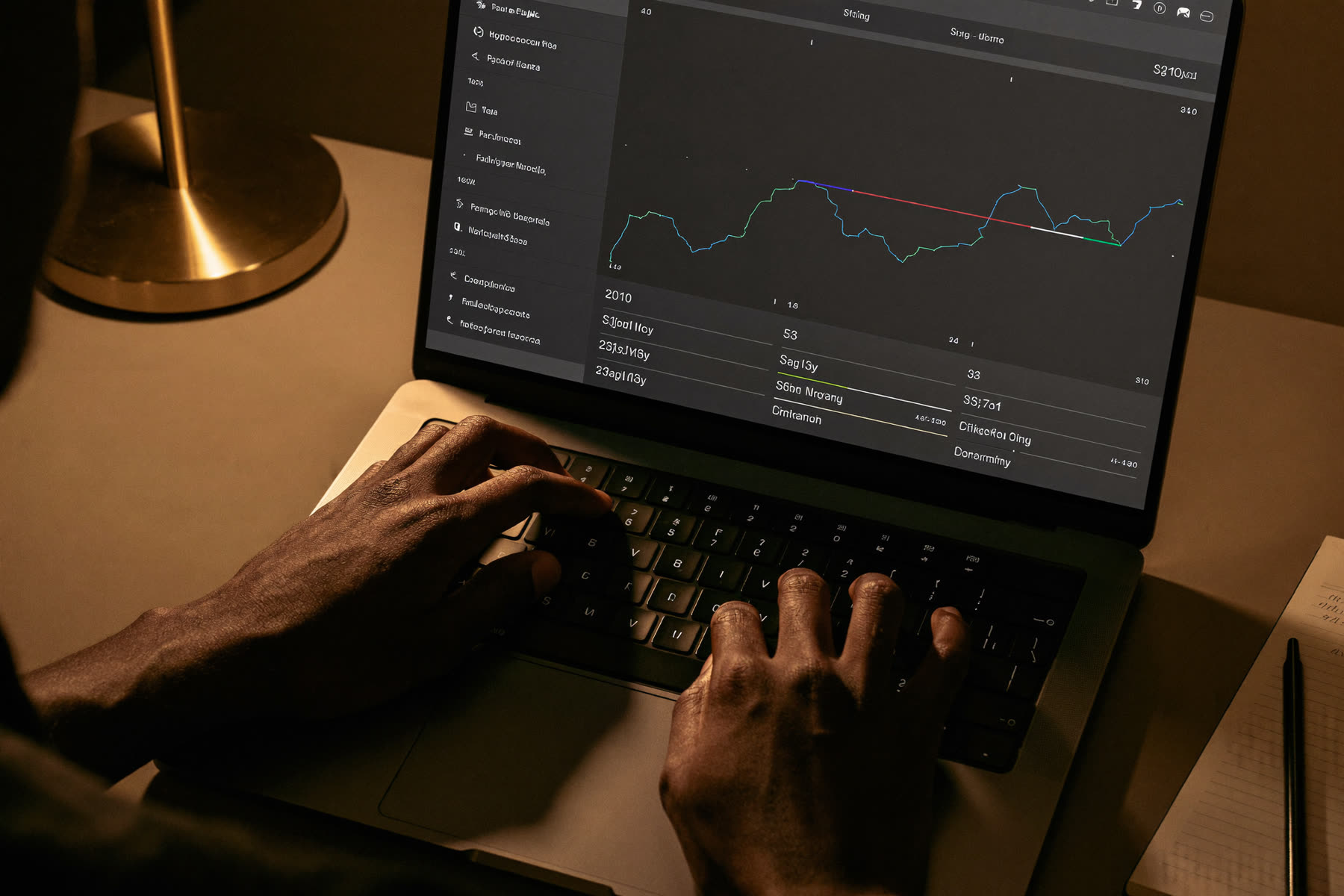



The machine wrote me six hundred words in about nine seconds. Clean. Confident. Read better than some things I labored over for an hour. And one number sitting in the middle of it was flat wrong.
Not a typo. Wrong. The kind of wrong that would have cost somebody money if it went out the door with my name on it.
Nine seconds to produce. Twenty minutes for me to catch. And here is the part worth your attention: catching it was the only part of that whole transaction anybody would have paid for.
So let me put the thing plain. AI made the answer free. It ain’t made being wrong no cheaper.
AI made the answer free. It ain’t made being wrong no cheaper.
What You Walking Away With
Three things. I’ma say them up front so you ain’t got to dig for them.
One. The price of producing a believable answer went to zero, but the price of a wrong answer never moved one cent. That gap is where your money is.
Two. You already own the habit that closes that gap. Whatever you do for a living taught it to you. You just ain’t been applying it to a screen.
Three. You stop selling the output and start selling the fact that you stand behind it. That is a different product at a different price.
The Answer Got Cheap. Being Wrong Never Did.
Think about what actually changed in the last couple years. It wasn’t your ability. It was the cost of generating something that looks done.
Used to be a decent proposal took you a Saturday. Now it takes a paragraph of instruction. Used to be a product description took real effort. Now you get forty of them before your coffee cool off.
That is a real shift and I ain’t knocking it. I use these tools every day.
But run the other side of the ledger. What does a wrong measurement cost today? Same as it cost in 1994. What does a wrong price on a quote cost? The whole margin. What does a wrong clause in an agreement cost? Could be the business. What does a wrong dosage, a wrong address, a wrong wire transfer cost?
Exactly what it always cost. Not a penny less.
So production got free and consequence stayed expensive. When one side of an equation collapse and the other side don’t move, value migrates. It always do. It moves to whoever is willing to absorb the consequence.
That person has a name in every industry on earth. They the one who is accountable. And accountable has always been the most expensive word in business.
Plausible Ain’t Correct
Here is the trap, and it is a well built one.
These tools are optimized to sound finished. That is not a flaw somebody will patch next quarter, that is the nature of the thing. It produces the most probable looking response. Probable and true overlap most of the time. Most of the time is a dangerous threshold to build a reputation on.
And it never hedge. It don’t say “I’m about seventy percent on this one, you may want to look it up.” It hand you the wrong number in the same steady tone it hand you the right one. No flinch. No tell.
Your whole life you been reading confidence as a signal of competence. In a person that is a rough but useful heuristic. Against a machine it is useless. The confidence is constant. It carry no information at all.
Plausible and correct ain’t the same thing. One sound finished. The other hold up.
So the question ain’t whether the tool is smart. It is smart. The question is who is standing between that output and a real human being who is going to act on it.
If the answer is nobody, you ain’t running a business. You running a rumor mill with good formatting.
Every Trade Already Got This Step

I want you to notice something about honest work. Every single trade worth respecting has a verification step baked into it, and nobody had to be talked into it.
The cook tastes it. Not once, three times, and definitely before it leaves the kitchen. The barber turns you to the mirror and checks it from both sides, then checks the back with a second mirror. The driver confirms the address before pulling off, because a package on the wrong porch is the same as a package nobody delivered.
The nurse repeats your name and your date of birth back to you. She just read it off the chart. She read it again anyway.
Nobody calls any of that a lack of confidence. We call it being good at the job.
Then the same person goes home, opens an app, gets a paragraph that sounds smart, and sends it straight to a client without a single one of the checks they would run on a plate of food.
Why? Because it came out clean. Clean reads like checked. It ain’t.
Every trade you respect got a step where somebody confirm the work before it ship. Yours got one too. You just stopped running it.
What A License Actually Buys You
I hold journeyman licenses in more than one state. Let me tell you what that paper really is, because it ain’t a trophy.
Nobody ever issued me a license for being fast. There ain’t one line on it about how quick I move. What that paper says is that when my name go on a job, somebody can come back on me. That is the entire arrangement. I accept the consequence, and in exchange I get to charge more than a man who can’t accept it.
I came up in commercial HVAC. Big systems, buildings full of people who never think about the air until it stop. On work like that you learn something early. The reading ain’t the answer. The reading is a claim. You confirm the claim, and you confirm it knowing that if you don’t, the failure got your name on it and not the gauge’s.
Then I come home from a job I still work, seven in the morning to three in the afternoon, and I build this whole thing in the hours left over. My wife Chiquita co founded it with me and she pay every business bill that leave this company. Not one of them go out without her eyes on it first. So I live in a house running two verification habits at once. One on the work. One on the money.
And I’ma be honest with you, because I ain’t standing on no mountaintop here. When I first started leaning on AI, I nearly let all of that go. The machine sounded certain, so I quit confirming. Took me a minute to notice I had started handing out claims with my name attached and no check behind them. That was me. Twenty something years of being accountable, almost undone by a tool that never once sounded unsure.
The Three Pass Check
This ain’t complicated and it don’t take long. Three passes. Run them on anything that is going to leave your hands.
Pass one. Pull every fact out. Numbers, names, dates, prices, laws, deadlines, claims about what something does. Put them in a list. If you can’t verify an item against a source you can actually point to, it comes out. Not softened. Out. This is the pass that protects you from the worst of it, because the thing will invent a statistic and a source for the statistic with equal calm.
Pass two. Ask what happens if this is wrong. Not whether it’s wrong. What it costs if it is. Some output is low consequence, like a caption. Some is high consequence, like a quote, a measurement, a contract term, anything medical, anything legal, anything with a dollar sign. High consequence items get a second source and your actual eyes. You are not checking everything equally. You are triaging by exposure, same as any grown professional.
Pass three. Read it as the person on the other end. Would they feel served or processed? AI is real good at the shape of helpful and real bad at knowing what this specific person already tried. You know things about your customer the machine will never have. Put them in.
Twenty minutes, maybe. On a thing that took nine seconds to make. That ratio is going to feel wrong to you. Sit with it anyway, because that twenty minutes is the only part of the job that nobody can download.
Now Charge For The Liability, Not The Labor
Here is where this turns into money, and it requires you to reposition what you are actually selling.
When you sell output, you are now competing against free. You will lose. Somebody with no skill and a subscription can produce something that looks like your deliverable. The market can’t tell the difference by looking, and the market ain’t going to pay a premium for something it can get in nine seconds.
But when you sell the fact that you checked it, you are selling something else entirely. You are selling the transfer of risk. The client is not buying words. They are buying the ability to stop worrying about whether the words are right, which is the thing they actually wanted the whole time.
That is why your rate ain’t a feeling, it’s a position. The position here is simple. I verified this. If it’s wrong, that’s on me. Say that out loud in your proposals and watch what happens to the conversation.
You don’t get paid for the answer no more. You get paid for standing behind it.
Where This Actually Shows Up In Your Pocket
Let me get concrete, because a principle you can’t act on is just a nice feeling.
Service work. You stop quoting the deliverable and start quoting the standard. Checked, sourced, and warranted. Charge for the warranty.
Digital products. A verified template beats a generated one by a wide margin, because the buyer has already been burned by generated. Say what you tested. That is the whole differentiator in a market getting flooded daily, and it applies the same to print on demand and digital products as it does to a service.
Your own authority. Being the person whose numbers hold up compounds quietly for years. It is a credential you issue yourself, and unlike a platform following, nobody can switch it off.
And none of this means doing more by hand. You still build the workflow once and let it run. You just put a gate at the end of it with you standing in the gate.
Worth watching this one if you want the mechanics of putting a standard into the system itself instead of carrying it in your head:
Survival Mode Will Tell You Speed Is The Product
I know why people skip the check. It ain’t laziness. It’s pressure.
When rent is close and the number in the account is low, volume feels like the only lever you got. Send more. Pitch more. Post more. Checking feels like a luxury for people who already made it.
But look at what that actually buys you. Motion is busy. Movement is going somewhere. Pushing out forty unverified things is motion. One thing that holds up, from somebody who can be held to it, is movement, and movement is what starts to compound.
Survival mode has you optimizing for today’s output. Builder mode has you optimizing for next year’s reputation. Same hours either way. Different asset at the end of it.
And this is the whole trade, not the trick. The trick is the prompt. The trade is knowing when the answer is wrong, and everybody got the same AI now, so the trick ain’t worth nothing. The trade is worth more than it ever was.
Do This Before Sunday
Small, and you can start tonight.
Pick one thing you put out this week using AI. Just one. Run the three passes on it, after the fact. Count what you find.
Then write your check down as an actual list, four or five lines, and keep it where you work. A habit you have to remember ain’t a habit, it’s an intention.
Last thing. On your next proposal, add one sentence: every figure in here has been verified and I stand behind it. Then go honor that sentence. The sentence is cheap. Honoring it is the product.
Dig. Build. Grow.
Dig is finding out what the market stopped paying for. It stopped paying for answers, because answers got free this year.
Build is putting the check back in. The one your work already taught you and the screen talked you out of.
Grow is pricing it honest, because accountability has never once been free and it ain’t going on sale now.
Your story ain’t over. The tools got cheap. Being somebody whose word holds up never did.